
RCC concrete crack repair guide
Why does RCC concrete crack and how can you address this permanently?
RCC concrete cracks can develop due to plastic shrinkage, thermal stress, overloading, ground settlement, or poor curing, and they must be monitored to distinguish minor surface flaws from serious structural threats. Even hairline cracks can allow moisture to reach the steel reinforcement, leading to corrosion, expansion, spalling, and reduced load-bearing capacity. Professional crack repair using specialised mortars, resins, and waterproofing systems is essential for long-term structural safety.



Table of Contents
- What are the common causes of RCC concrete cracks?
- How do you differentiate between surface flaws and structural threats?
- How does moisture accelerate internal structural damage?
- What preventive strategies should be adopted during construction?
- Why is professional assessment mandatory for effective crack repair?
- Key Takeaway?
- FAQs
Reinforced Cement Concrete (RCC) serves as the structural backbone of modern homes, valued globally for its load-bearing capability and absolute architectural versatility. However, concrete is inherently weak in tension, making it highly susceptible to cracking when subjected to shifting weather, heavy loads, or foundation settlement.
When environmental stressors such as intense heat and moisture exert pressure on a building, the rigid concrete is pushed to its physical limits. Without a systematic response, minor cracks can quickly turn into serious structural damage that threatens your home’s overall health.
What are the common causes of RCC concrete cracks?
Concrete undergoes significant physical and chemical changes from the moment it is mixed, poured, and left to dry. A frequent issue during the initial setting phase is ‘plastic shrinkage’, which occurs when surface moisture evaporates rapidly before the mixture has gained enough tensile strength.
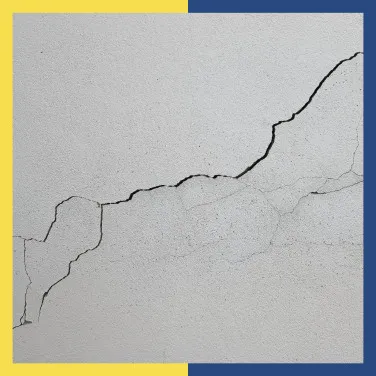
- This rapid loss of hydration inevitably pulls the fresh surface apart, resulting in shallow hairline cracks in concrete roofs and slabs.
- Beyond initial shrinkage, continuous daytime heating from the sun causes severe thermal stress, causing the concrete slab to expand rapidly.
- At night, as temperatures drop, the entire mass contracts, creating strain that eventually opens fine surface fractures.
- Physical loading problems also play a role; placing excessive weight on beams can overload the structure and cause additional cracks.
How do you differentiate between surface flaws and structural threats?
To protect your building effectively, you must learn to classify the various types of cracks in concrete assemblies. Not all fractures carry the same level of danger; some are cosmetic flaws that stay confined to the outer plaster, while others signify severe structural distress.
- Non-structural cracks are typically thin and shallow and do not threaten the immediate load-bearing safety of the building.
- However, these surface breaks must still be monitored, as they can widen over time when left exposed to seasonal temperature changes.
- Deep structural cracks pose a significantly higher risk because they run deep into the concrete core and grow actively over consecutive months.
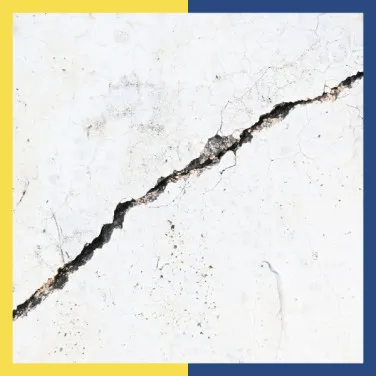
- You can easily identify these dangerous patterns when they appear diagonally across load columns or run through the full thickness of a ceiling slab.
- Recognising these deep fractures early allows homeowners to organise a targeted concrete crack fix before internal shifting causes permanent structural failure.
How does moisture accelerate internal structural damage?
While a fine surface split might initially seem like an isolated visual issue, leaving hairline cracks in concrete open creates a direct pathway for moisture. Concrete is porous and acts much like a dense sponge, drawing water deep into its internal structure through natural capillary action.
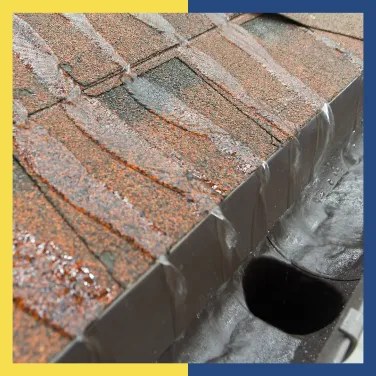
- When rainwater penetrates these tiny openings, it passes through the outer concrete layer and comes into direct contact with the internal steel reinforcing bars.
- Once water and oxygen reach the embedded steel, deep structural corrosion is almost unavoidable.
- As steel rebars rust, they expand several times their original size, creating even more internal pressure.
- This intense expansion causes the surrounding concrete to crack further, delaminate, and crumble away completely in a process called spalling.
- Ultimately, unsealed hairline cracks in concrete weaken the internal reinforcement, reducing the building's load capacity and causing severe damage to interior ceilings.
What preventive strategies should be adopted during construction?
The absolute best way to manage concrete degradation is to implement strict quality control protocols right during the initial construction phase. This ensures the structure develops maximum density and natural resistance against future cracking.
- Engineers must tightly control the water-cement ratio, as adding excessive water to the mix can weaken the cured concrete matrix.
- Following rigorous, uninterrupted curing schedules guarantees that the cement hydrates fully, minimising the development of early cracks.
- For properties that are already built and showing signs of weathering, relying on a simple cosmetic coat will not stop ongoing moisture ingress.
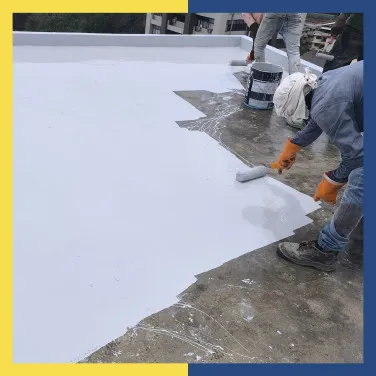
- Property owners must invest in professional concrete crack repair to restore their RCC concrete.
Why is professional assessment mandatory for effective crack repair?
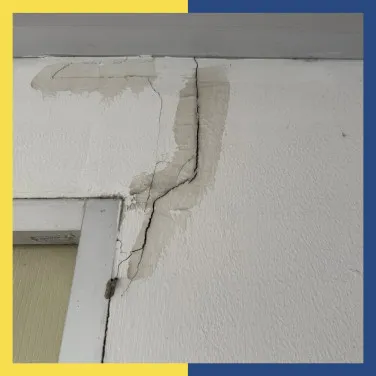
Many homeowners attempt to patch visible fissures using basic wall putty or standard cement paste, assuming a quick DIY layer will resolve the leak. However, these rigid, off-the-shelf materials undergo significant shrinkage, lack adequate bonding strength, and fail because they don't address the root cause.
Long-lasting RCC concrete crack repair requires a technical understanding of whether a fracture is active (moving) or static (stable) to select the correct material viscosity. Authorised waterproofing experts use advanced diagnostic tools to map the exact nature of the structural damage. This helps you find the best, most effective waterproofing solution for your RCC concrete surfaces.
Key Takeaway?
RCC cracks are not just cosmetic issues; timely professional repair using trusted systems like Dr. Fixit’s is essential to protect structural strength and durability. Ignoring a crack allows moisture to compromise your reinforcing steel, turning a simple maintenance task into an expensive structural crisis.
Dr. Fixit’s high-performance structural repair and waterproofing products deliver exceptional durability and reliable moisture protection tailored for modern residential buildings. To safeguard your home from internal structural degradation, always rely on authorised contractors who perform repairs strictly in accordance with technical standards.
Fill out our contact form below to schedule a comprehensive site evaluation with a Dr. Fixit technical expert today.
FAQs
1. Why do newly constructed concrete roofs develop fine hairline cracks?
Newly poured concrete roofs develop fine hairline cracks in concrete primarily due to plastic shrinkage. If the surface water evaporates too quickly under direct sunlight or wind before the concrete has fully cured and hardened, the surface layer pulls apart, creating fine, shallow fissures.
2. What is the difference between a static crack and an active crack?
A static crack remains stable in size and length over time, making it easy to permanently fix with standard fillers. An active crack continuously opens, closes, or grows longer due to ongoing structural settlement or daily thermal expansion, requiring highly flexible, elastomeric repair materials.
3. Can I use a regular cement-sand paste for permanent concrete crack repair?
No, regular cement paste has zero flexibility, undergoes high shrinkage when drying, and lacks bonding strength. When the structure undergoes its next natural thermal shift, the rigid cement patch will rapidly crack and debond from the old concrete surface, causing the leak to return.
4. How does a professional contractor perform a deep concrete crack fix?
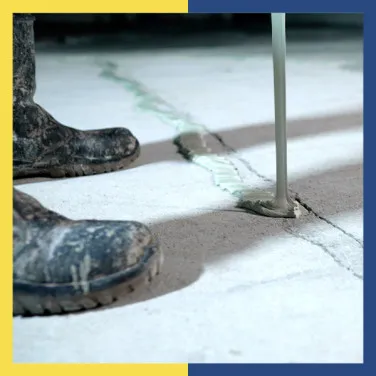
A professional contractor opens up the crack into a clean V-groove, removes all loose dust, and applies a specialised bonding primer. For deep cracks, they use high-pressure injection ports to pump low-viscosity epoxy or polyurethane resins directly into the core, filling the void from the inside out.
5. How long can I safely ignore a crack before it causes severe structural damage?
Cracks should never be ignored, especially if they are exposed to rainwater or external dampness. Within just one or two monsoon seasons, moisture ingress can initiate corrosion of internal steel reinforcement, leading to expanding rust, crumbling concrete plaster, and severe structural weakening.
Get Professional Waterproofing Solutions Today
Fill The Form below to took free site evaluation by Dr. fixit point safe painting service expert


Get Professional Waterproofing Solutions Today
Fill The Form below to took free site evaluation by Dr. fixit point safe painting service expert
